
Bees are flying insects closely related to wasps and ants, and are known for their role in pollination and for producing honey and beeswax. There are nearly 20,000 known species of bees though many are undescribed and the actual number is probably higher. They are found on every continent except Antarctica, in every habitat on the planet that contains insect-pollinated flowering plants. Honey bees are more effective at pollinating almonds when other species of bees are present, says an international research team in ground-breaking research just published in the Proceedings of the Royal Society. The research, which took place in California’s almond orchards in Yolo, Colusa and Stanislaus counties, could prove invaluable in increasing the pollination effectiveness of honey bees, as demand for their pollination service grows. When blue orchard bees and wild bees are foraging in almonds with honey bees, the behavior of honey bees changes, resulting in more effective crop pollination, said lead author Claire Brittain. Wild bees include non-managed bees such as bumble bees, carpenter bees and sweat bees.
Subscribe to EHS Newletter
About EHS News
Sharing is Caring Below is a picture of me and my mom and dad before my father passed away. The EHS News network is 100% volunteer effort dedicated to help people, like my father, gather the best information to protect our people and planet.

Our sources are linked below and throughout this site.
PLEASE thank them for their contributions in protecting our
greatest investments, people and our planet.
Sorry no Advertising on our site:
This site is strictly for educational and public awareness purposes.
However, if you have a Environmental, Health or Safety
resource you would like to share PLEASE contribute your EHS News!
Just email it to me at:
ehsdirector (at) gmail.com
NO DONATIONS
If you want to donate, ask around where you can help in your local community.
Help is needed everywhere and is best invested by those who can thank you
personally. - Haase
State by State Environmental Resources
To view a resource locator for a particular state, select the state from below.
Land & Water | Waste | Air | Pollutants/Toxics | Health & Safety |
General/Other | State Regulations | Small Business State Contacts | EPA State Tools
| LAND AND WATER |
|
|
|
|
|
|
|
|
|
|
|
|
|
|
|


| WASTE |
|
|
|
|
|
|
|
|
|
|
|
|
|
|
|


| AIR |
|
|
|


| POLLUTANTS/TOXICS |
|
|
|
|
|
|
|


| HEALTH AND SAFETY — GENERAL/OTHER |
|
|
|
|
|
|
|


| STATE REGULATIONS |
|

| SMALL BUSINESS STATE CONTACTS AND RESOURCES |
|
| EPA STATE TOOLS |
|
 The EPA maintains State Resource Locators and contact information for several topics: Air Quality – Ambient
Our Support
NOTE: We post articles because we think they are of interest. Doing so doesn’t mean that I necessarily agree with every—or any—opinion in the posted article. And although we often post about disagreements, it is VERY important to understand that we agree and proudly support, more of the ideas of U.S. Leaders than disagreed. (it is just part of democracy, it gives balance and is vital)
Word of the year:
Freedom isn't free, just ask any soldier.
From me to you - Thanks!
No I don't support the idea of never ending war in our world.
But I do have to support the people who have given me the right and freedom to complain about it.
Please support our veterans by doing anything you can to boost theirs spirits and hope.



I write a lot of this before I have my coffee.

Getting up every morning before 4am... the only thing that looks good is coffee.

I do not think President Obama regularly drank coffee we he was in senate,

but he may want to try it on his new job.
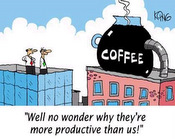
WARNING: coffee is harmful to the environment, small woodland animals and people who like to maintain status quo



This website is licensed under a
Creative Commons
License.
What are our
favorite blog feeds?
----------------------------------------
There is not enough room to list all...but, Here are a few good ones in no
particular order.
The best one would be EHS News
of course ;-)
Environmental Health & Safety News
Environmental News Bits
Laura Barnes Rocks!
Environmental Science & Technology - ACS.org
Environmental, Health & Safety
Union of Concerned Scientists (UCS)
SEJ Environmental Journalism Today
Air Resources Board
What's New
NIEHS - National Institute of Environmental Health Sciences
Regulatory
CBO Publications
CDC's Morbidity & Mortality
Weekly Report
Census Bureau
Population Estimates
Docuticker - love it!
News from the National Academies
Pollution Prevention (P2Tech)
WI - Environment, Recycling, & L& Use
Great Lakes Pollution Prevention Roundtable (GLRPPR) Environmental News
Great Lakes & L& Protection
GLIN Daily News
GLRPPR Documents
Great Lakes Echo
Great
Lakes For All
Sustainability
Japan for Sustainability
SusHI | Sustainability in Hawaii
Business & Sustainable Development News
Green Trust Sustainability & Renewable Energy
Green-Trust.Org
Jetson Green
Erik Lindberg of
Transition Milwaukee
Energy
ASPO-USA: Peak Oil & Gas
The Oil Drum - Energy & Our
Future
Peak Energy
Cleantech Blog
Idaho Samizdat: Nuke Notes
IEC Fusion
Technology
Safety
The Pump Handle
Chemical / Green Chemistry
ChemAlliance
Environmental News
Chemical & Engineering News
Chemicals Manufacturing - GLRPPR
Hazardous Waste Clean-Up Information
Environmental
Protection & Compliance
Environmental Health - Journal Articles
Environmental Leader
Environmental
Management Systems (EMS): GLRPPR
National Environmental Compliance Clearinghouse (EPA)
EPA - Greenversations
Amazon
Rainforest News
Joel Makower: Two Steps Forward
Jeff Vail - Law, Energy
David Hone of SHELL
National
Environmental Priorities & Leadership
National Priorities Project
- Bringing the Federal Budget Home
Wisconsin DNR News Releases
U.S. EPA~ News
U.S.
Senate Committee on Environment & Public Works
White House - Council on
Environmental Quality
TechStuff


Connect with EHS News